Imagine this: You’re running a thriving business in Washington State, and everything seems to be going smoothly until a client files a lawsuit for an alleged mistake in your work. That’s when Errors and Omissions (E&O) Insurance becomes your best friend. This type of insurance acts as a safety net, protecting you from potentially devastating financial losses due to claims of negligence or inadequate work.
Understanding the ins and outs of Errors and Omissions Insurance is crucial for any professional looking to safeguard their venture. This comprehensive guide dives deep into the necessity, coverage, and legal requirements of E&O insurance in Washington State, ensuring you’re well-prepared to make informed decisions and keep your business thriving.
Understanding Errors and Omissions Insurance
Did you know that 30% of businesses are sued for professional mistakes at least once every year? Errors and Omissions Insurance (E&O) is your shield against costly lawsuits.
Here’s the deal: E&O insurance is crucial for any business providing professional services or advice in Washington State. Whether you’re a consultant, a real estate agent, or in tech, this policy has got your back. It covers the legal costs and damages if a client claims your work was flawed or you failed your contractual obligations.
Coverage of Errors and Omissions Insurance
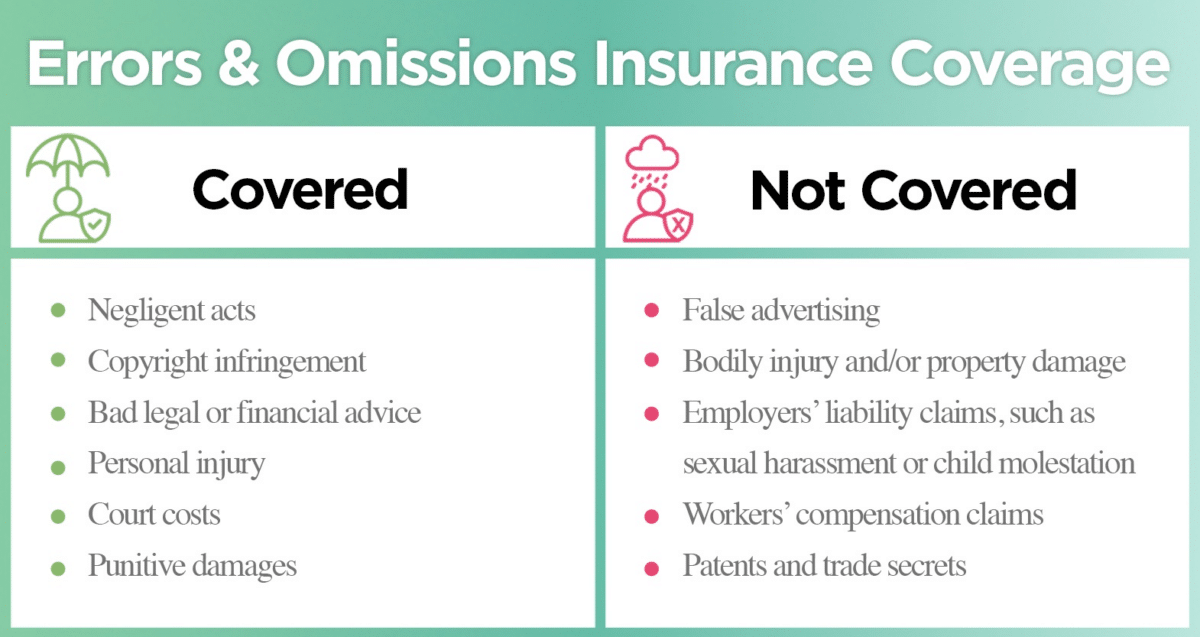
Errors and Omissions Insurance doesn’t just cover legal fees. It also takes care of settlements and judgments if you’re found liable. What’s more, it protects you even if the claim against you is groundless. BUT, don’t assume every scenario is covered—limitations exist.
Typical Exclusions and Limitations in E&O Policies
Most E&O policies will not cover fraudulent acts, intentional wrongdoing, or criminal activity. Also, general liability issues like bodily injury or property damage are outside its scope. Here’s a Pro Tip: Always read the fine print to understand what your policy doesn’t cover.
Key Benefits of E&O Insurance for Businesses
Check out this table outlining the primary advantages of maintaining a robust E&O policy:
| Benefit | Description |
|---|---|
| Legal Defense | Coverage for legal fees and court costs, even if the claim is unfounded. |
| Financial Protection | Protects assets by covering settlements and judgments. |
| Client Confidence | Boosts credibility and trustworthiness with clients. |
| Peace of Mind | Allows you to focus on business without fear of litigation. |
Legal Requirements in Washington State
Did you know that failing to have Errors and Omissions Insurance in Washington State could get you into legal trouble? This isn’t just a suggestion—it’s a legal must-have for certain professions.
The state of Washington has specific regulations around E&O insurance. Whether you’re in real estate or a tech startup, understanding these rules can save you from hefty fines. Let’s dive into what’s required by law.
Industries Required to Have E&O Insurance
In Washington State, certain industries are not just encouraged but mandated to carry Errors and Omissions Insurance. We’re talking about professions like real estate agents, insurance brokers, and financial advisors. If you operate in these fields, having E&O insurance isn’t optional—it’s a legal requirement.
But here’s the deal: compliance isn’t just about checking a box. It’s about safeguarding your practice from potential lawsuits that could cripple your business. So, make sure you’re covered before it’s too late.
Compliance Process for E&O Insurance
Getting compliant with E&O requirements in Washington isn’t as daunting as it seems. Step #1, verify what your specific profession mandates. Each industry has different coverage limits and requirements. Step #2, find a reputable insurance provider who understands the nuances of Washington’s legal landscape. Step #3, routinely audit your policy to ensure it aligns with any changes in state laws.
Pro Tip: Always keep your E&O policy updated to reflect any new services you offer. This could save you from unforeseen liabilities.
Failing to comply with these mandates could lead to serious consequences. Here are some potential penalties you could face:
- Hefty fines that could cripple your business.
- Legal sanctions that may include suspension of your professional license.
- Increased scrutiny during audits and renewals.
Understanding these legal requirements can be the difference between running a successful business and facing financial ruin. Don’t overlook the power of being properly insured—it could save you in the long run.
Cost Factors for E&O Insurance
Wondering why your E&O insurance premiums seem all over the map? You’re not alone. The cost of errors and omissions insurance in Washington State can vary significantly based on several key factors.
Understanding these factors can help you better predict and possibly reduce your premiums. So, let’s dive in and see what shapes the cost of your E&O insurance.
Industry and Coverage Limits
One of the biggest cost drivers is the industry you operate in. For instance, a tech consultant might pay a different premium compared to a real estate agent. Why? Because the nature of work and potential risks vary considerably between industries.
Coverage limits also play a large role. A $500,000 policy will inevitably cost less than a $5 million policy.
Here’s the deal: If you’re in a high-risk industry, expect to pay more. But choosing higher coverage limits will also increase your premium. So, balance your need for protection with your budget.
Calculating Potential Premiums
So, how exactly do you calculate your potential premiums for E&O insurance? Start by assessing the specific risks associated with your business.
- Identify the industry-specific risks you face.
- Decide on the coverage limits you need to protect against those risks.
- Consider your claim history, as this can influence your rates significantly.
Pro Tip: Get quotes from multiple insurers to compare how different companies evaluate these factors. This can help you snag a better deal!
Impact of Claim History
Did you know that having a history of claims can significantly spike your E&O premiums? Yep, insurers see a track record of claims as a red flag, indicating a higher risk of future claims.
Here’s how it works: If you’ve had no claims in the past, insurers might offer lower rates as a reward for your clean history. BUT, even one or two claims can lead to a substantial increase in your premium.
Maintaining a solid track record is key to keeping insurance costs down.
If your history isn’t spotless, consider risk management practices to prevent future claims. This doesn’t just protect your business; it protects your wallet too.
Comparing Insurance Providers
Choosing the right Errors and Omissions insurance provider in Washington State can feel like finding a needle in a haystack. But it doesn’t have to be that way if you know what to look for and how to compare.
Let’s dive into how you can effectively compare the top E&O insurance providers in the state. You want to ensure you’re getting the best value while covering all your bases.
Major Insurance Providers in Washington State
Here’s a quick look at some of the major players in the Washington State E&O insurance market. You need to consider factors like premium costs, coverage options, and customer service. Check out this comparison:
| Provider | Premium Cost | Coverage Options | Customer Service |
|---|---|---|---|
| Provider A | $$$ | Comprehensive | 24/7 Support |
| Provider B | $$ | Standard | Business Hours |
| Provider C | $ | Basic | Online Only |
As you can see, there’s a big difference between providers. Premium cost isn’t the only thing you should focus on. Support and coverage options can make or break your experience.
Process of Selecting an E&O Insurance Provider
Choosing an E&O provider is more than just picking the cheapest option. Here’s how you can make an informed decision:
- Identify your specific needs and risks.
- Compare coverage levels and deductibles.
- Evaluate the provider’s financial stability and customer reviews.
- Consider the ease of claim process.
- Don’t forget to check for any hidden fees.
By following these steps, you’ll be able to zero in on a provider that aligns with your business needs.
Criteria for Evaluating Provider Reliability and Reputation
Reliability and reputation are crucial. But how do you assess them?
- Check if the provider is licensed in Washington State.
- Look for AM Best ratings for financial strength.
- Read online reviews and customer feedback.
- Ask about their claims handling process.
Here’s the deal: a higher-rated provider can mean better service when you need it most.
Customer Testimonials and Case Studies
Real-life experiences can give you a clearer picture of what to expect. Here are some insights from customers:
“Provider A helped us navigate a tough claim with ease, and their 24/7 support was a lifesaver!”
“We switched to Provider B for the cost savings, but found their coverage options limited.”
Customer stories like these highlight the importance of choosing the right provider for your specific needs.
Claims Process for E&O Insurance
:max_bytes(150000):strip_icc()/EO-Final-35aff6b5f50644aabd242e60da643e80.jpg "Understanding Errors and Omissions Insurance in Washington State - bad ...")
Did you know that over 50% of small businesses have faced legal action at some point? That’s why understanding the claims process for E&O insurance is crucial. The better you know it, the faster you can get back to business.
Filing a claim under an E&O insurance policy might seem intimidating. But with a clear roadmap, you can navigate it smoothly. Here’s how to handle it like a pro.
Steps to File an E&O Insurance Claim
First, you need to act quickly. As soon as you are aware of a potential claim, notify your insurer. This is Step #1 and it’s critical. Delays could jeopardize your coverage.
- Step #2: Gather all necessary documentation. This includes contracts, emails, invoices, and anything else related to the claim.
- Step #3: Fill out your insurer’s claim form with all the details. Accuracy is key here.
- Step #4: Submit the claim form and documentation to your insurer. Keep copies of everything for your records.
- Step #5: Follow up regularly. Stay in touch with your claims adjuster to ensure your claim is progressing.
Pro Tip: Document everything from the start. It’s better to have too much information than too little.
Overview of Required Documentation
Here’s the deal: without the right documentation, your claim process can hit a roadblock. Insurers typically require detailed records of the incident leading to the claim.
- Written correspondence, such as emails and letters, with clients or third parties.
- Contracts and agreements related to the work in question.
- Financial records, including invoices and payment receipts.
- Evidence of professional advice or services provided.
The more comprehensive your documents, the smoother the claims process.
Common Challenges and Solutions
Filing a claim isn’t always a walk in the park. You might face disputes over coverage or delays in processing.
To tackle these challenges, keep the lines of communication open with your insurer. If a dispute arises, consider consulting a legal professional who understands E&O insurance intricacies.
Many claims get bogged down due to incomplete paperwork. Double-check everything before submission to avoid this pitfall.
Guide to Managing and Resolving E&O Claims
Managing E&O insurance claims effectively can save you time and stress. Here’s a guide to make it happen.
- Stay organized with a claims calendar to track important dates and deadlines.
- Maintain a dedicated folder (physical or digital) for all claim-related documents and correspondence.
- Communicate consistently with your insurer and be proactive in providing any additional information they need.
- If the process stalls, escalate the issue to a higher authority within the insurance company.
Remember, persistence and organization are your best allies in resolving claims efficiently.
Risk Management and Mitigation Strategies
Did you know that 53% of businesses face an E&O claim at some point? It’s a staggering figure that underscores the importance of having robust risk management strategies.
Here’s the deal: while insurance covers you, preventing these claims from happening in the first place is even better. By adopting effective risk management practices, you can minimize your exposure and protect your business from costly claims.
Designing Strategies to Minimize E&O Claims
The first step in reducing E&O claims is to identify potential risks specific to your business. Conducting thorough risk assessments helps you pinpoint areas of vulnerability. Once identified, design strategies tailored to address these risks.
- Develop clear procedures and workflows tailored to your business model.
- Implement a robust quality control process to catch errors before they escalate.
- Regularly train staff on industry standards and best practices.
The Role of Risk Assessments in Preventing E&O Claims
Risk assessments are not just a checkbox exercise. They are the cornerstone of effective E&O risk management. By systematically reviewing your business operations, you can identify weak spots before they become costly claims.
Conduct assessments at multiple levels: industry trends, internal processes, and external client interactions. This multi-tiered approach ensures you catch risks from all angles.
Pro Tip: Integrate technology tools like risk management software to automate and streamline your risk assessment process.
Best Practices for Compliance with E&O Policy Terms
Ensuring compliance with your E&O insurance policy is crucial. It’s not just about having the policy—it’s about understanding and adhering to its terms. Regularly review your policy and stay updated on any changes.
- Maintain thorough documentation of all contracts and client interactions.
- Promptly report potential claims to your insurer to avoid coverage issues.
- Review and update your policy annually to adapt to changing business needs.
Integrating E&O Risk Management with Business Strategies
Aligning your E&O risk management with your broader business strategies can lead to a more resilient organization. By embedding risk management into your strategic planning, you not only protect your business but also enhance operational efficiency.
Step #1: Collaborate with your risk management team during strategic planning sessions. Step #2: Ensure that risk mitigation strategies support and enhance your business goals.
Final Summary
In conclusion, Errors and Omissions Insurance isn’t just a legal requirement for many professionals in Washington State; it’s an essential component of a robust risk management strategy. By understanding the coverage, costs, and claims processes, you’re setting your business up for resilience against unforeseen challenges. So, take the proactive step towards securing your business’s future with the right E&O insurance coverage today.
FAQ
What is Errors and Omissions Insurance?
Errors and Omissions Insurance, also known as professional liability insurance, protects businesses against claims of negligence or inadequate work.
Is E&O insurance mandatory in Washington State?
For certain professions, such as real estate agents and financial advisors, E&O insurance is required by law in Washington State.
What does E&O insurance typically cover?
E&O insurance covers legal fees, settlements, and judgments related to claims of errors or omissions in professional services.
What are common exclusions in E&O policies?
Common exclusions include fraudulent acts, intentional wrongdoing, and claims related to physical harm or property damage.
How does claim history affect E&O insurance premiums?
A history of claims can increase premiums, as insurers view businesses with past claims as higher risk.
